Building on Permanence in a World Obsessed With the Next New Thing
Inspired by
Ryan Levesque: “Wake Up Call: The Illusion of Permanence….”
If the five-year chapter you’re living right now had a title… what would it be?
That question has been sitting with me as we step into a new year — especially in a world that seems increasingly addicted to whatever is newest, fastest, or trending. We are constantly encouraged to pivot, upgrade, optimize, and reinvent. And while change itself isn’t the problem, the pace and focus of change can quietly pull us away from what actually lasts.
History offers a sobering reminder: even what feels dominant is rarely permanent.
Not long ago, Skype — once the gold standard of online communication — was officially discontinued. Entire businesses were built on platforms like MySpace, Vine, and Clubhouse, each of which felt inevitable in their moment. They weren’t failures. They were simply temporary.
And yet, many of us build our identities, careers, and confidence on things that sit firmly at the bottom of the permanence scale.
What If We’re Asking the Wrong Question?
Instead of obsessing over what’s changing in the world right now, what if we anchored our lives — and our work — around what doesn’t change?
Jeff Bezos once said that while people constantly ask what will change in the next ten years, almost no one asks what won’t — and that second question is far more important. Why? Because you can build something enduring on what’s stable.
That idea has stayed with me.
Especially as I think about legacy.
Looking Through a Longer Lens
Lately, I’ve been reflecting on the skills and values I want to pass on to my grandchildren.
Not the skills that are trending.
Not the ones that promise quick wins.
But the ones that will still matter ten, twenty, fifty years from now — regardless of what technology comes next.
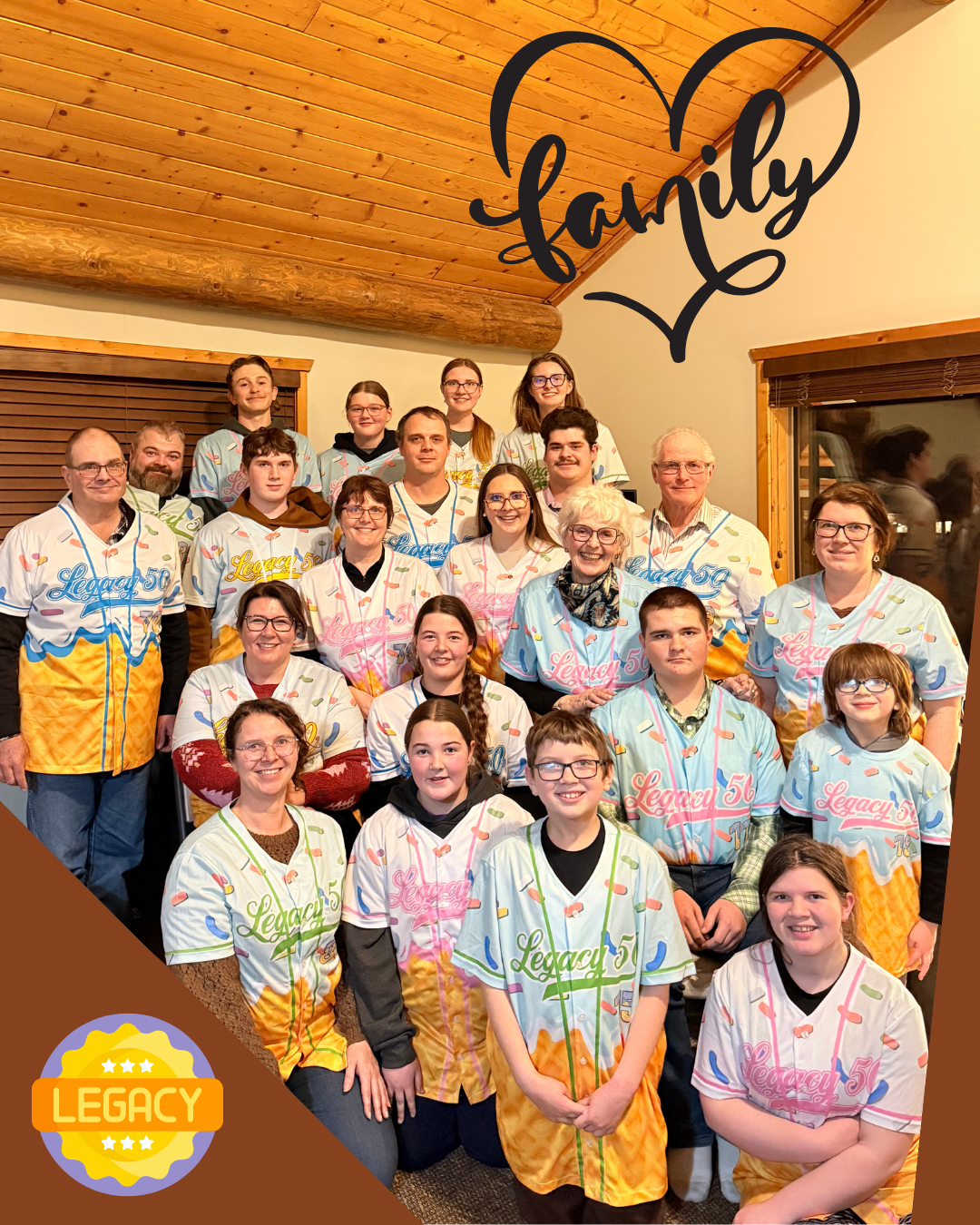
Our family
When I look at this photo, I’m not thinking about platforms, algorithms, or job titles. I’m thinking about the kind of people they are becoming. I’m thinking about what will steady them when the world feels uncertain — because it always does, in every generation.
Parenthood is forever. Influence is forever. And the choices we make today quietly shape the foundation others will stand on tomorrow.
The Scale of Permanence: A Lesson from the Land
Years ago, while reading about permaculture, I was introduced to a concept that profoundly reshaped how I think about decisions: The Scale of Permanence.
In permaculture design, you plan first for what changes the least — climate, landform, water — before focusing on what changes the most, like crops or fencing. When decisions are made in reverse order, systems become fragile. When they’re made in the right order, systems become resilient.
The same principle applies to life and business.
If you build your identity around tools, tactics, or labels that constantly shift, you’ll always feel behind. But if you anchor yourself to what endures, you gain the freedom to adapt without being uprooted.
Ryan Levesque speaks about designing around durable human desires instead of fragile tactics — a perspective that feels especially relevant in this season of rapid technological acceleration.
Permanent Anchors vs. Temporary Tools
Some things simply don’t expire:
More Permanent (Long-Term Anchors)
Core human desires: connection, security, meaning, growth
Timeless principles: trust, reciprocity, storytelling
Lifelong skills: strategic thinking, resilience, adaptability, discernment
Less Permanent (Short-Term & Changeable)
Platforms and tools
Job titles and labels
Marketing channels and tactics
The mistake many people make is building their identity on the bottom of that list.
When a platform disappears, they feel lost.
When a role changes, they feel irrelevant.
When a tool evolves, they feel behind.
But the skills didn’t disappear — only the wrapper did.
The Skill That Matters More Than Ever: Discernment
One skill I’ve been reflecting on deeply is discernment — the ability to recognize what has value, what is good, and what is truly worth your time.
In an age where AI can generate infinite content, information is no longer scarce. Judgment is.
AI can produce endlessly, but it cannot evaluate meaning. It cannot feel nuance, context, or human weight. It doesn’t know when something is aligned — only when it is possible.
Discernment is the human skill of choosing wisely.
It’s knowing when something adds depth — and when it simply adds volume.
It’s recognizing quality over convenience.
It’s deciding what deserves your attention — and what does not.
Discernment includes what some might call taste — but it goes deeper than preference. It’s judgment shaped by values, experience, and consequence.
And unlike tools or platforms, discernment does not expire.
How Discernment Is Developed
Discernment isn’t downloaded. It’s cultivated.
It grows slowly, through:
Experience — seeing how choices play out over time
Mistakes — learning what doesn’t work and why
Pattern recognition — noticing what repeats and what endures
Reflection — asking Was this worth it? Did this align?
Discernment is built when we pause long enough to ask better questions:
Does this add value — or just urgency?
Is this aligned with my values — or just convenient?
Will this matter a year from now? Five years from now?
This is why discernment strengthens with age, not speed. It’s a quiet form of wisdom that comes from paying attention — and being willing to learn.
Why Farm Life Naturally Teaches Discernment
One of the gifts of farm and ranch life is that it quietly trains discernment every single day.
You learn:
What can wait — and what cannot
What looks good short-term — and what costs you later
When to act — and when to leave things alone
The land teaches patience.
Seasons teach humility.
Outcomes teach truth.
You don’t get instant feedback — but you always get honest feedback.
That kind of environment shapes judgment. It teaches you to think in years, not weeks. To value what lasts. To respect effort, timing, and consequence.
Those lessons carry far beyond the land. They show up in decisions, relationships, leadership, and legacy.
Discernment may be one of the greatest gifts we pass on — not because it guarantees the right answers, but because it teaches how to choose.
The Values That Don’t Expire
Skills matter. Strategy matters. But beneath all of it are values — the quiet anchors that shape how skills are used.
Values don’t trend.
They don’t get discontinued.
They don’t require updates.
When I think about legacy, these are the values I hope ripple forward:
Integrity — doing the right thing when no one is watching
Responsibility — owning choices rather than blaming circumstances
Work Ethic — understanding that meaningful things are built, not downloaded
Curiosity — asking better questions instead of chasing quick answers
Resilience — staying grounded when life doesn’t go as planned
Connection — valuing people over platforms
Tools will change.
Titles will evolve.
But values determine how we show up — no matter the era.
And when skills are built on values, they don’t just help someone succeed. They help someone live well.
Expanding the Time Horizon
One of the greatest traps of modern life is short-term thinking. We optimize for what works now without asking whether it will still matter later.
A simple filter helps bring clarity:
Will the version of me ten years from now be proud of this decision?
That question cuts through noise quickly.
The best decisions we make aren’t about the next month or even the next year. They’re about the next decade.
So Here’s the Reflection
If the five-year chapter you’re living right now were part of your story…
Would it be titled Chasing the Next Thing —
or Building What Lasts?
Take a moment with that.
And if you’re feeling the pull to root your health, work, and life in something more enduring, my friend, you don’t have to do that alone. I invite you to explore what permanence looks like for you — and to build forward from there.